
Care at home
Support at home, on your terms
Most people would rather stay in their own home. Our job is to make that possible — with the right amount of help, from people you get to know.
What is domiciliary care?
Care that comes to you
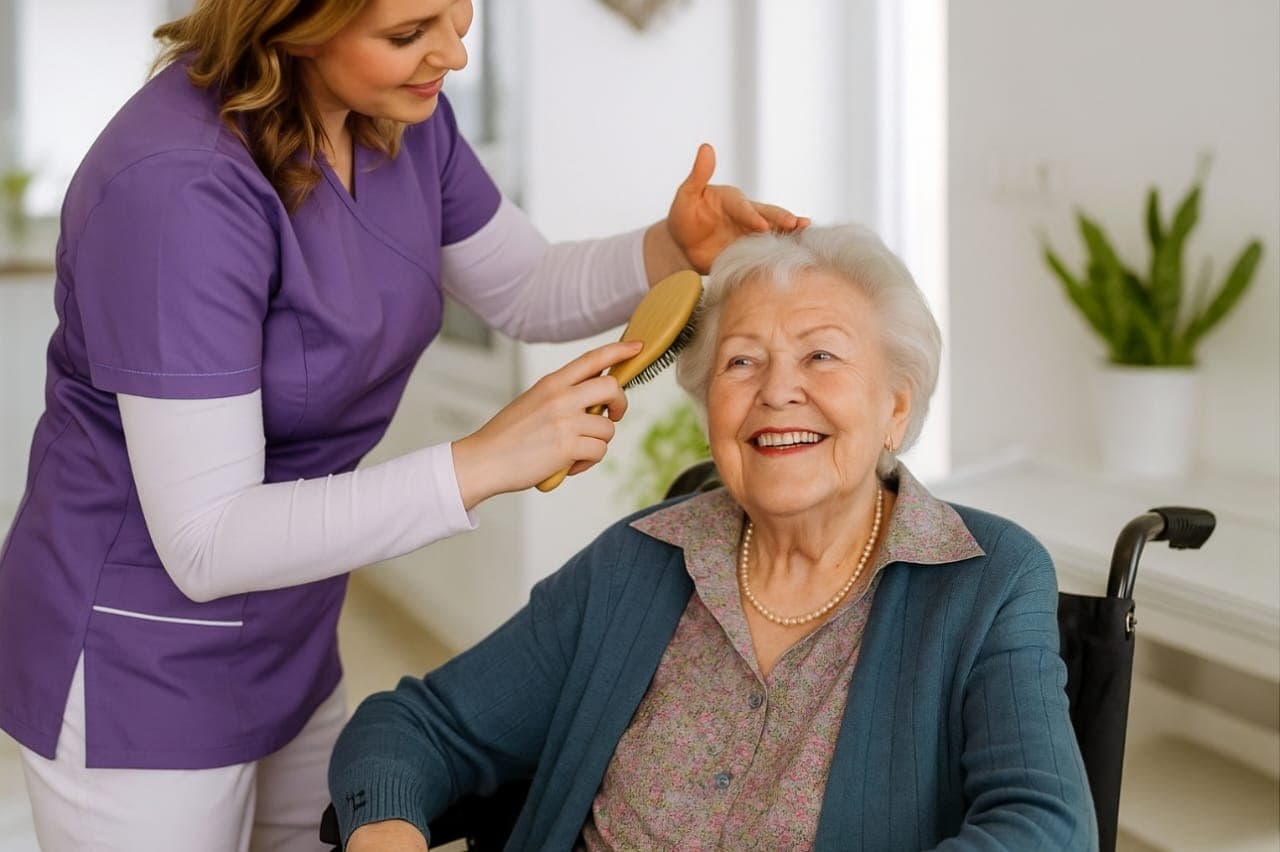
Domiciliary care — often just called home care — means a trained carer comes to your home to help with the things that have become difficult. It can be half an hour in the morning, or round-the-clock support.
It is built around what you actually want. Some people need help washing and dressing. Some need someone to make sure medication is taken. Some mostly want company. Most want a mixture, and that mixture changes over time.
Nothing is fixed. If your needs change, the plan changes with them.
What's included
The everyday things that make the difference
Your care plan is built from these, in whatever combination suits you.
Personal care
Discreet help with washing, dressing, grooming, continence support and getting in and out of bed.
Medication support
Prompting, administering and recording medication in line with your care plan and GP instructions.
Meals and nutrition
Preparing meals to your taste, helping at mealtimes, and keeping an eye on appetite and fluid intake.
Help around the home
Light housework, laundry, shopping, and keeping the home safe and comfortable.
Getting out and about
Support to attend appointments, see friends, go to a club, or simply get some fresh air.
Companionship
Time spent talking, sharing a hobby or a cup of tea. Often the part that matters most.
Types of support
However much help you need
Visiting care
Planned visits from as little as half an hour, once or several times a day. Good for a bit of daily help while keeping your independence.
Overnight care
A carer stays overnight — either sleeping in and available if needed, or awake through the night for higher needs.
Live-in care
A carer lives in your home to provide continuous support. Often a genuine alternative to moving into a care home.
Respite and short-term care
Cover while a family carer takes a break, or short-term support after a hospital stay or a fall.
What does it cost?
Costs depend on how much support you need and when. We will always give you a clear written quote before anything starts, and we will not ask you to commit to a long contract.
[TODO: INSERT REAL HOURLY RATES AND LIVE-IN WEEKLY RATES, OR CONFIRM THAT PRICING SHOULD STAY "ON ENQUIRY". No rates have been invented here.]
You may be entitled to help with funding through your local council or NHS Continuing Healthcare. We can point you in the right direction, though we cannot give financial advice.
Enquire
Arrange a free home assessment
Three short steps. No obligation, and no charge for the assessment.
Where we work
Areas we cover
We support people at home, and supply staff to care homes, across four areas around our Rugby base.
- Our base
Rugby
Warwickshire
Rugby is where we started and where our team is based, at Davy Court on Central Park. Being local means short travel times between calls, so carers arrive when they said they would and spend their time with you rather than in the car. We support people across the town and the surrounding villages, and our office team know the area well enough to plan rotas around it.
Including
- Rugby town centre
- Hillmorton
- Bilton
- Brownsover
- Newbold-on-Avon
- Dunchurch
- Long Lawford
- Clifton-upon-Dunsmore
Coventry
West Midlands
Coventry is a short drive from our Rugby base, and we support both households and care providers across the city. As a large urban area with a mix of city-centre flats, suburban housing and a significant student and working-age population caring for older relatives at a distance, needs vary a great deal — so care plans here are built individually rather than to a template. We also supply nurses and care assistants to residential and nursing homes across the city.
Including
- Coventry city centre
- Earlsdon
- Cheylesmore
- Longford
- Binley
- Walsgrave
- Tile Hill
- Foleshill
Leicestershire
Leicestershire
Leicestershire covers a wide area, from larger towns through to villages where the nearest shop or surgery is a drive away. That rural spread is exactly where home care matters most, because staying at home often means staying near family, neighbours and a community someone has known for decades. We plan visits here with realistic travel time built in, and we are honest with you about which parts of the county we can reliably cover before anything is agreed.
Including
- Lutterworth
- Hinckley
- Market Harborough
- Broughton Astley
- Blaby
- Wigston
- Countesthorpe
- surrounding villages
Northamptonshire
Northamptonshire
Northamptonshire sits just over the border from Rugby, and we support households and care providers across the northern and western parts of the county in particular. As with Leicestershire, distances can be significant, so we would rather tell you plainly whether we can staff a package properly than take it on and let you down. For care homes, we supply nurses and care staff for planned rotas as well as short-notice cover.
Including
- Daventry
- Northampton
- Towcester
- Brackley
- Long Buckby
- Weedon
- surrounding villages
Coverage depends on the level of support needed and current staffing. We will always tell you honestly at the enquiry stage whether we can cover your address properly, rather than agreeing and then struggling to staff it.
Would it help to talk it through first?
You do not need to have decided anything. Call us and we will talk through the options — including the ones that are not us.
Or call us on 01788 422422